


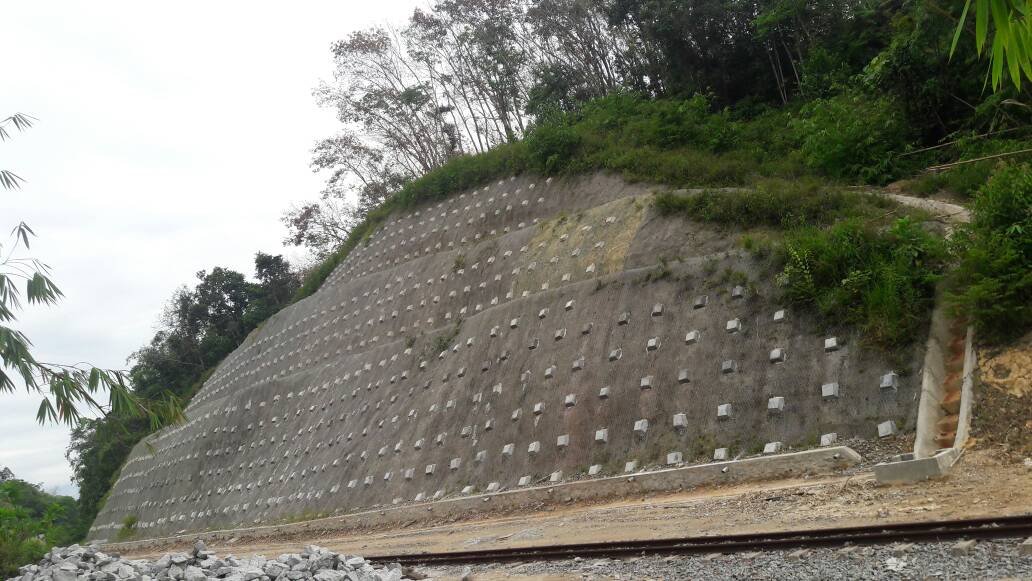
Slope failures, manifesting as everything from subtle soil creep to devastating landslides, are a perennial challenge in engineering and land management. They represent a fundamental imbalance where the downward pull of gravity overwhelms the forces holding the earth in place. Understanding and proactively managing this risk is crucial for protecting infrastructure, property, and human life. This comprehensive guide delves into the science of slope instability and outlines the most effective, innovative, and sustainable strategies available today for reinforcing our landscapes.
Understanding the Dynamics of Slope Failure
Before an effective solution can be devised, we must first understand the fundamental causes of slope failure and the specific role of the environment. A successful strategy begins with accurate diagnosis.
The Science Behind Slope Collapse
Slope failure is a direct result of the destabilizing forces (primarily gravity, water pressure, and external loads) exceeding the resisting forces (soil cohesion and internal friction). When this crucial balance tips, the slope succumbs to a failure.
Several factors conspire to cause this imbalance:
- Geological Composition: Slopes composed of weak, fractured rock, or layers of loose, unconsolidated debris are inherently vulnerable. The presence of clay layers, which become slick when wet, is a common culprit.
- Water Infiltration: Water is arguably the greatest enemy of slope stability. When water infiltrates soil, it increases the weight of the slope (a destabilizing force) and, more critically, it builds up pore pressure within the soil, which drastically reduces the frictional resistance (a resisting force).
- External Loading: Human activities, such as placing large amounts of fill at the crest of a slope, or natural events like heavy seismic activity, can apply sudden, excessive loads that push the slope past its breaking point.
The Critical Role of Soil and Weather
The very makeup of the ground beneath our feet determines how a slope will react to stress. Soil composition is central to slope stability.
- Cohesive vs. Non-Cohesive Soils: Clayey soils, or cohesive soils, can swell and shrink with changes in moisture, leading to cracking and weakening. Sandy soils, or non-cohesive soils, drain faster but rely almost entirely on friction between particles to maintain stability; when saturated, this friction can be lost quickly. Engineers must conduct thorough soil testing to understand the material’s shear strength (the maximum stress it can withstand before failing).
- Weather Patterns: Seasonal changes act as catalysts for failure. The risk of slope failure typically peaks during prolonged rainy seasons or following rapid snowmelt, where the ground becomes fully saturated. Furthermore, freeze-thaw cycles in colder climates can physically break apart soil and rock, weakening the overall structure over time. As climate change increases the frequency and intensity of extreme weather, the need for adaptive slope management becomes even more urgent.
Innovative Techniques for Slope Reinforcement
Modern geoengineering and bioengineering offer a robust toolkit for reinforcing slopes, moving beyond simple excavation to provide durable, effective, and often sustainable solutions.
Geoengineering Marvels: Structural Reinforcement
These methods involve introducing external materials or structures to physically bind and support the slope, dramatically increasing the resisting forces.
- Retaining Walls: These are built at the base or along the face of a slope to hold back the soil. They are an essential physical barrier, but require deep, stable foundations.
- Soil Nailing and Anchors: This technique involves drilling steel bars (soil nails) or cables (anchors) deep into the unstable slope mass. Grout is then injected to bond the steel to the soil, effectively turning a loose soil mass into a more solid, reinforced block. This method is highly effective for steep cuts and excavations.
- Geosynthetics: Modern materials like geogrids and geotextiles are lightweight, durable plastic fabrics. Geogrids provide tensile strength to soil (like rebar in concrete), while geotextiles are used primarily for filtration and separation, preventing fine soil particles from washing away and improving drainage.
Biotechnological Approaches: Plants Saving the Earth
Why rely solely on steel and concrete when nature offers its own powerful reinforcement? Biotechnological approaches harness the power of vegetation to stabilize slopes sustainably.
- Root Reinforcement: Plant roots act as a natural binding mesh, increasing the cohesion and shear strength of the soil. The roots penetrate the soil mass and hold it together, much like a natural soil nail.
- Erosion Control: The canopy of leaves intercepts rainfall, reducing the impact energy that causes surface erosion. Furthermore, the roots improve the soil’s capacity to absorb water, reducing harmful surface runoff.
- Bioengineering and Green Infrastructure: Projects utilize native plants in strategically engineered ways, such as creating vegetation mats or using specialized planting techniques to establish deep, dense root systems. This synergistic approach stabilizes the slope while simultaneously enhancing local biodiversity, offering a sustainable alternative to traditional, invasive engineering methods.
Tailoring Strategies to the Environment
There is no “one-size-fits-all” solution in slope stabilization. Effective projects must employ adaptive solutions tailored to the unique conditions of the site.
- A highly stressed urban slope may require a structural system like a retaining wall or soil nailing to protect nearby buildings.
- A gently sloped, rural embankment might be best served by bioengineering and improved drainage, as it’s more cost-effective and environmentally sound.
Engineers use advanced tools like geospatial data and 3D modeling to simulate slope behavior under different weather and load conditions, allowing them to precisely determine the optimal blend of engineering and biological techniques for maximum safety and efficiency.
Monitoring, Maintenance, and Lessons Learned
A stabilized slope is not a set-it-and-forget-it project. Continuous monitoring and proactive maintenance are essential for long-term safety.
State-of-the-Art Monitoring Technologies
Modern technology provides a critical edge in predicting and preventing slope failures by offering real-time data on slope “health.”
- Remote Sensing: Techniques like InSAR (Interferometric Synthetic Aperture Radar) and LiDAR (Light Detection and Ranging) use radar and laser pulses, often from satellites or drones, to map vast areas. They can detect subtle, millimetre-scale shifts in the ground surface that are invisible to the naked eye, providing early warnings of deep-seated movement.
- Ground-Based Sensors: Inclinometers installed deep within the slope measure lateral movement, while piezometers track groundwater pressure. Continuous data from these sensors allows engineers to know exactly when internal conditions are approaching critical levels.
- AI and Predictive Modeling: Engineers now use machine learning algorithms to analyze the massive amounts of data collected by these sensors. The AI can identify complex patterns that precede failure, greatly enhancing the predictability of slope behavior and allowing for targeted, preventive maintenance.
Key Signs of Instability
Homeowners, site managers, and construction crews need to be trained to recognize the warning signs that a slope is failing. Timely intervention can prevent catastrophe.
- Ground Cracks: New or widening cracks on the ground, especially near the crest of the slope.
- Structural Damage: Cracks in pavements, foundations, or retaining walls; utility poles or fence posts tilting downhill.
- Water Changes: New seepage or wet areas that were previously dry, or water pooling in unusual spots.
- Vegetation Changes: Plants or trees tilting (often referred to as a “drunken forest” appearance), or a sudden wilting of vegetation on the slope.
The Importance of Regular Maintenance
Maintenance is the most cost-effective form of risk mitigation. A proactive approach focuses on managing the primary culprit: water.
- Drainage System Integrity: Routine inspection and clearing of ditches, culverts, and downspouts are non-negotiable. Clogged drains allow water to pool and seep into the soil, directly increasing the risk of failure.
- Vegetation Management: Overgrown vegetation can sometimes conceal cracks, while dead or dying vegetation can signal underlying instability. Conversely, maintaining a healthy, specified vegetation cover is crucial for surface stability.
- Seasonal Assessments: After major weather events like heavy rain or snowmelt, slopes must be inspected immediately for signs of erosion or movement.
Learning from the Past
Case studies, both successful and catastrophic, are essential for improving future strategies.
Successful projects often demonstrate an integrated approach, blending structural reinforcement with ecological restoration. For example, some large-scale watershed restorations have used soil nailing for deep stability while utilizing bioengineering to restore the surface, resulting in projects that are both structurally sound and environmentally rich.
Conversely, failures often reveal common mistakes:
- Inadequate Planning: Not accounting for site-specific geological complexities or extreme weather events.
- Ignoring Warnings: Failing to act on clear early signs of instability detected during monitoring.
- Lack of Maintenance: Letting drainage systems fail or allowing critical vegetative cover to die off.
The future of slope stabilization is moving toward increasingly sustainable and resilient infrastructure. With continued advancements in AI, smart materials (like geosynthetics that respond to soil changes), and a growing commitment to green engineering, we can look forward to a world where we manage the earth’s powerful dynamics with greater precision and safety than ever before.